
Choosing pool fencing for your backyard sounds straightforward until you start comparing options and realise there is a lot more to consider than just how it looks in photos. If you have been researching glass pool fencing in Adelaide, you have probably noticed how stunning it can appear in showrooms and on social media. But is it actually the right choice for your home?
The honest answer is that it depends, and this post is here to help you figure that out. We are going to walk through everything you need to know, including how glass and aluminium compare on looks, cost, maintenance, durability, and compliance with South Australian regulations. We will also cover what professional installation involves and give you a practical framework for making the decision that suits your specific backyard.
No sales pitch here, just a straightforward comparison so you can choose with confidence. Whether you are leaning toward the sleek look of glass or the practical appeal of aluminium, by the end of this post you will know exactly what you are signing up for with either option.
Glass vs Aluminium Pool Fencing: The Short Answer
Both glass and aluminium pool fencing can fully comply with Australian standards and South Australian pool safety regulations. Compliance is not unique to one material. What separates them is cost, maintenance, and how well each holds up across Adelaide’s climate zones.
Glass fencing wins on aesthetics and open sightlines, and that is a genuine advantage worth acknowledging. However, it costs significantly more upfront and carries ongoing maintenance demands that many Adelaide homeowners underestimate before committing.
Aluminium pool fencing delivers reliable compliance, lower lifetime cost, and stronger durability, particularly in coastal suburbs where salt air puts metal hardware under constant pressure. For most Adelaide backyards, it is the more practical choice.
That said, the right decision comes down to your specific situation: your budget, your property type, how close you are to the coast, and how much time and money you are willing to spend on upkeep over the years ahead. Before diving into any material choice, it also helps to understand what SA pool fence regulations actually require before installation, so you can plan around compliance from the start.
This piece works through each comparison dimension so you can make a deliberate, informed decision rather than one based on how a fence looks in a showroom photo.
Visual Appeal and Sightlines: Where Glass Has the Edge
Let’s start with the clearest advantage glass has: you can see straight through it.
Frameless glass pool fencing removes every visual barrier between your outdoor living area and the pool. In a compact Adelaide backyard, that unbroken sightline makes the space feel noticeably larger, which is a genuine, practical benefit, not just a marketing claim. It also makes supervising kids in the water easier from the entertaining area.
From a design standpoint, glass reads as premium. It photographs beautifully, which is why it’s a popular choice for new builds and renovations where the backyard needs to look polished for resale or rental appeal.
If the fully frameless look is out of budget, semi-frameless glass is worth considering. Semi-frameless glass brings the upfront figure down and still keeps most of the open, airy feel.
That said, aluminium pool fencing has come a long way. Modern slat profiles, screen styles, and a wide range of powder-coat colours mean it can complement a contemporary Adelaide home without looking like an afterthought. If you’re weighing up the options, it’s worth looking at why aluminium slat fencing works so well for modern residential properties.
If aesthetics are your top priority and your budget allows for it, glass is a legitimate option worth exploring seriously.
Pool Fencing Compliance in SA: What Both Options Must Meet
South Australian pool safety law sets a clear non-negotiable baseline, and understanding it upfront shapes every material and budget decision.
All pools in Australia must be fenced by law, and in South Australia that means your barrier must satisfy AS 1926.1, the Australian Standard governing pool safety fencing. Both glass and aluminium pool fencing can fully comply, provided they are correctly specified and installed.
The core requirements to know:
- Minimum height of 1,200mm for pool barriers (boundary fences used as part of the barrier require at least 1,800mm on the pool side)
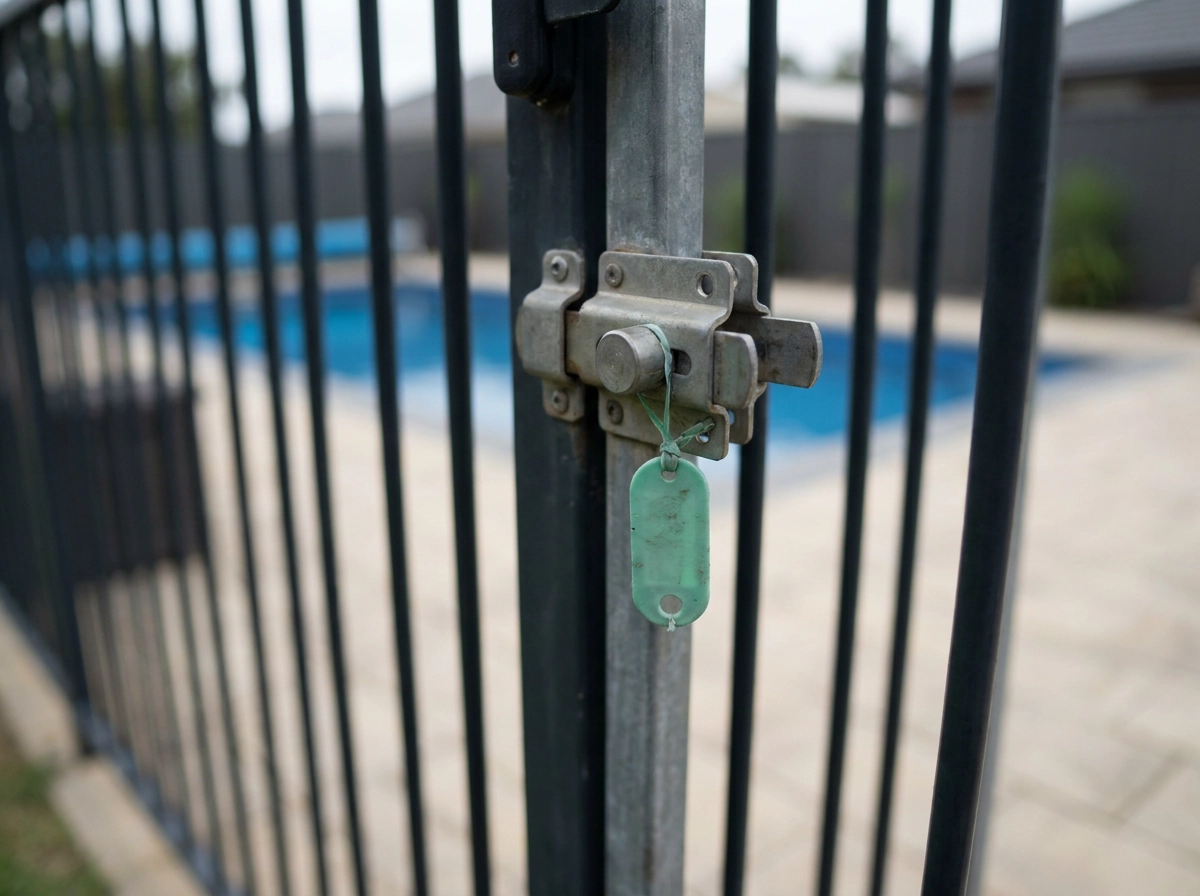
- Self-closing, self-latching gates that swing outward from the pool area, with the latch positioned out of reach of small children
- No climbable footholds within 900mm of the top of the fence, so young children cannot scale it
For glass fencing specifically, your installer will need to confirm the panel specification meets AS 1926.1 requirements, not all glass types are suitable, so verify this before purchasing.
Aluminium pool fencing must meet the same height and gate requirements. Compliant panel configurations are widely available from experienced Adelaide fencing installers, so this is rarely a barrier to getting the job done.
The important point for either material: compliance is not automatic. A glass or aluminium fence that is poorly installed, incorrectly specified, or fitted with gates that do not latch properly will fail inspection. Material choice matters less than getting the installation right.
Budgeting for the full project? Our guide on what drives fence costs in Adelaide can help you think through the broader picture before committing.
Cost Comparison: Upfront Price and Lifetime Value
Once compliance is sorted, cost usually becomes the deciding factor, and this is where glass and aluminium fencing pull apart quickly.
Frameless glass is among the most expensive pool fencing options available, panels, spigots, and skilled labour all push the per-metre cost significantly higher than aluminium. Semi-frameless glass brings the upfront figure down and still keeps most of the open, airy feel, but it still sits noticeably higher per metre than aluminium.
Aluminium pool fencing is accessible for a much wider range of Adelaide renovation budgets. That gap matters when you are also budgeting for landscaping, paving, or a pergola alongside the pool.
The lifetime cost comparison is where things shift even further. Glass fencing requires regular cleaning to stay presentable, and if a panel is damaged, replacement requires specialist glass work, which can add unplanned cost and delay. Aluminium, by contrast, needs very little ongoing expenditure. An occasional hose-down is usually enough. The same cost-versus-value thinking applies across other fencing decisions too; if you have looked at how Colorbond and timber fencing compare on real costs and upkeep, the pattern is familiar.
For most Adelaide homeowners, aluminium delivers full compliance and long-term durability while leaving money for other backyard priorities.
Maintenance in Adelaide Conditions: The Reality of Glass Upkeep
Adelaide’s hot, dry summers mean dust and fine grime can settle on large glass panels. Frameless systems are the worst for this because there are no frame lines to break up the surface, so every smear and film is immediately visible. Add pool water splashes, sunscreen residue, and fingerprints, and the fence can look tired within days of cleaning.
Water spots and sunscreen buildup do not come off with a quick hose-down. They need proper glass cleaner and elbow grease, and that cleaning routine adds up in both time and cost over a year, and most people do not price it in at the planning stage.
If your property is near the coast, suburbs like Glenelg, Brighton, Henley Beach, or Semaphore, it is worth asking your installer specifically about hardware specifications for salt-air environments, as metal fittings in glass systems can be a long-term vulnerability. If you are unsure whether hardware wear is cosmetic or structural, this guide to deciding whether your Adelaide fence needs a repair or full replacement is a useful starting point.
Powder-coated aluminium fencing, by contrast, needs very little. An occasional rinse with a garden hose keeps it looking clean and performing well, even in coastal conditions.
Before committing to any material, ask your Adelaide pool fencing installer to walk you through realistic maintenance expectations. It is a straightforward conversation that can save a lot of frustration later.
Durability Across Adelaide’s Climate: Coastal Suburbs and Beyond
Maintenance and durability are closely linked, but they are not the same thing. Maintenance is what you do regularly; durability is how well a material holds up when you cannot be there to protect it.
Adelaide’s climate tests pool fencing from two directions. In the hills and northern suburbs, UV intensity and summer heat are the dominant stressors. Coastal suburbs face additional salt-air stress on hardware. Good pool fencing needs to handle both.
Toughened glass panels are generally considered resistant to UV discolouration, though the weak points in any glass system are the metal spigots, hinges, and gate hardware. These components are typically stainless steel or coated aluminium, and in coastal environments they can be vulnerable to corrosion without regular attention. The glass may look fine while the fittings quietly degrade beneath it.
Aluminium pool fencing with a quality powder-coat finish is widely used in coastal and high-UV environments across Australia, ask your installer for product specifications and any relevant warranties. If you are interested in how powder-coat finishes hold up broadly across Adelaide’s conditions, the same principle applies to why Colorbond fencing is a popular choice for Adelaide properties.
If a glass panel is damaged it requires full replacement, while aluminium components can typically be replaced section by section, worth considering when comparing long-term repair scenarios.
For elevated hills blocks exposed to strong winds, or beachside properties with constant salt air, aluminium pool fencing simply has fewer vulnerabilities over the long term.
Which Option Suits Your Backyard? A Practical Decision Framework
So, with durability and climate performance covered, the practical question becomes: which material actually fits your backyard?
As covered in the compliance section, SA regulations set minimum height, gate, and non-climbable zone requirements that any correctly installed fence, glass or aluminium, must satisfy.
Glass pool fencing suits a specific type of project. If you’re building new or undertaking a high-end renovation where aesthetics are central, your block is well-sheltered from coastal winds, and you’re prepared for regular upkeep, glass is a legitimate choice worth budgeting for properly.
For the majority of Adelaide homeowners, aluminium is the more practical option. Whether you’re working with a standard renovation budget, living in a coastal suburb like Henley Beach or Brighton, or simply want a fully compliant, low-maintenance result that performs well over time, aluminium ticks those boxes consistently.
Smaller backyards aren’t limited to a solid fence either. Aluminium slat and screen styles deliver a modern, open feel without the cleaning demands of large glass panels.
If supervision is a priority because you have young children or pets, both materials can work. Open-panel aluminium configurations offer clear sightlines just as frameless glass does, so compliance and visibility aren’t exclusive to one choice.
The most reliable way to land on the right material is to talk through your specific block, suburb, and budget with a local specialist. A team specialising in fencing Adelaide homeowners can rely on will factor in all those details before recommending anything.
Installation: Why Getting It Right Matters for Both Materials
Once you have settled on a material, installation is where compliance is either won or lost.
Pool fencing is not a DIY job for most homeowners. An incorrectly installed fence can fail a compliance inspection, create liability exposure, and require costly rework before your pool can be used legally.
Glass fencing installation is particularly unforgiving. Panels require precise alignment, spigots must be set to the correct depth and spacing, and gate hardware needs accurate calibration so self-closing and self-latching mechanisms function reliably. If any of these elements are off, the fence will not meet certification requirements under AS 1926.1, regardless of how good it looks.
Aluminium pool fencing is generally more straightforward to install, but it still demands correct post setting, accurate rail and panel spacing, and properly adjusted gate hardware. Gate hardware is a frequent focus of compliance inspections, so correct adjustment of self-closing and self-latching mechanisms is essential.
Getting installation right the first time matters beyond just cost. Delays to your compliance certificate mean delays to using your pool, which adds frustration on top of extra expense.
Working with an experienced Adelaide pool fencing installer removes that risk. A tradesperson familiar with SA pool safety requirements knows what inspectors look for and builds to that standard from the start. Our approach to gate installation at New Fence Adelaide reflects that same attention to compliant hardware and adjustment.
New Fence Adelaide installs aluminium pool fencing across Adelaide and can advise on compliant configurations suited to your property and suburb.
The Honest Verdict: Choosing Pool Fencing That Works for Adelaide
So, where does this all land?
As this post has shown, glass suits a specific kind of project; for most Adelaide backyards, aluminium is the more sensible long-term investment.
Whatever material you settle on, the single most important step is working with a local installer who understands SA pool safety requirements. Correct installation is what turns a good-looking fence into a compliant, certifiable barrier that does its job reliably year after year.
Ready to work out which option suits your property? Contact New Fence Adelaide for a straightforward conversation about pool fencing solutions tailored to your suburb, block, and budget. No pressure, just honest, practical advice from a team that knows Adelaide fencing.
Conclusion
Pool fencing is one of those decisions where the right choice depends heavily on your specific block, suburb, and budget, and where getting installation right is as important as the material itself. Regardless of which material you choose, professional installation by a local expert is non-negotiable for achieving a certifiable, safe barrier.
Your backyard deserves a pool fence that looks great, stays compliant, and holds up year after year without becoming a burden. The right decision starts with the right conversation.
Contact New Fence Adelaide today to get honest, tailored advice on pool fencing that suits your property, your suburb, and your budget. Take the guesswork out of compliance and make your pool area safer from day one.