You’ve probably spent time searching for aluminium slat fencing prices online, only to walk away more confused than when you started. One website says $150 per metre, another says $600, and most of them are quietly quoting supply-only prices that have nothing to do with what you’ll actually pay once a tradie shows up at your property.
Here’s the truth: aluminium slat fencing price per metre in Adelaide varies enormously, and without understanding what drives those numbers, it’s almost impossible to budget your project with any confidence.
This guide cuts through the noise. We’ll explain why the prices you find online can be misleading, what installed aluminium slat fencing realistically costs in Adelaide right now, and the key factors that push your quote up or down. You’ll also get a straight comparison against Colorbond and timber, a breakdown of gate costs, and a plain-English look at what SA law says about sharing the bill with your neighbour.
By the end, you’ll know exactly what questions to ask before you contact a fencing contractor, and you’ll have a realistic sense of whether aluminium slat fencing is the right fit for your project and your budget.
Why the Prices You Find Online Are Often Misleading
Most prices you’ll find online are supply-only figures. That means no labour, no post installation, no concrete footings, no waste cuts, and no site preparation. The panel price looks appealing, then the real cost arrives with the quote.
Supply-only aluminium slat panels typically run $95–$155 per square metre. Installed pricing is the only figure worth budgeting against.
The published range across Australian sources is wide: $120 to $700-plus per lineal metre installed. That reflects genuine differences in slat specification, fence height, site conditions, and installer tier. A basic face-fixed 1.5m fence on flat ground costs far less than a concealed-fix 2.1m installation on a sloped coastal block.
For Adelaide specifically, installed quotes for a standard 1.8m fence tend to cluster between $190 and $500 per lineal metre. Outliers exist at both ends depending on scope and complexity.
Before comparing any two quotes, ask: what’s actually included? Two quotes at “$250 per metre” can represent very different projects if one includes footings and the other doesn’t. If you’re ready to move past the guesswork, get aluminium slat fencing installed by Adelaide experts who provide clear, itemised pricing from the start.
What Installed Aluminium Slat Fencing Actually Costs in Adelaide
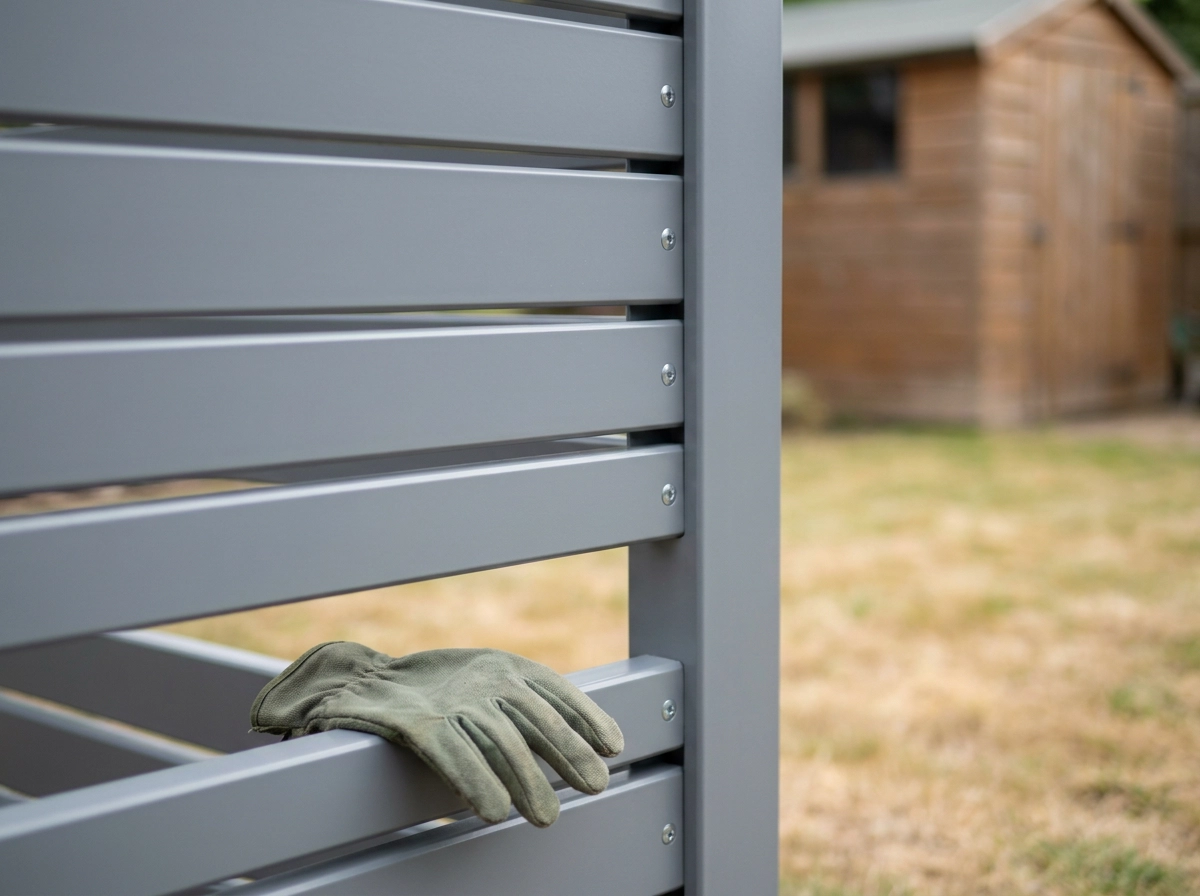
For a standard 1.8m residential fence, costs fall into three tiers. Where your project lands depends on specification, not luck:
At the budget end ($190–$250/m): you’re looking at straightforward work. Standard slat widths, a straight run, face-fixed screws, easy site access, and a colour from the standard range. Simple scope, competitive price.
In the mid-range ($250–$400/m): this is where most typical Adelaide suburban installs land. A standard post-and-panel system, perhaps a minor level change or awkward access, and a single colour selection. Nothing exotic, but real-world conditions.
At the premium end ($400–$500+/m): complexity drives the cost. Concealed fixing systems, custom powder coat colours, wider blades, tighter gap spacing, or specialist post types such as bolt-down on an existing concrete slab all push the price into this tier.
To put real numbers on it: a 25m run using 65mm blades, 20mm gaps, and 1.8m post centres typically comes to $5,000–$8,000 installed. Upgrading to 100mm blades on that same run pushes the figure to $5,750–$9,500.
These estimates suit a standard suburban block. Coastal or sloped sites carry additional costs, which the next sections cover in detail. For context on how these figures compare to steel fencing, the Colorbond fence cost guide for Adelaide is worth a look before you finalise your budget.
The Six Things That Push Your Price Up or Down
Here are the six variables worth understanding before you request a quote.
Slat width. Narrower 65mm slats mean more pieces per panel and more labour than wider 90mm or 100mm blades. Wider blades cost more per unit but go up faster. Ask your installer to quote both options.
Gap spacing. Closing the gap from 20mm down to 10mm increases blade count by 20–30% across the same run, meaning more material and installation time for identical fence length.
Odd-length runs. Aluminium slat panels come in fixed lengths. Where your boundary does not divide evenly into those lengths, each partial panel must be cut to fit. Budget roughly $70 per cut panel, plus unavoidable material waste.
Fixing system. Concealed fixing adds around 10–20% to labour costs. It takes longer than face-fixed screws, but the clean finish is a big part of why people choose aluminium slat.
Site conditions. Rocky ground, Adelaide clay requiring deeper post holes, sloped blocks, or restricted vehicle access each add roughly 10–20% to overall costs. Steeply sloped sites may also need stepped or raked panels, adding further time and complexity. Our frequently asked questions about aluminium slat gates in Adelaide covers how site conditions affect gate installation specifically.
Finish and colour. Most suppliers include a standard colour range in base pricing. Custom colours or dual-tone finishes attract a premium on both supply cost and lead time.
Post Type and Fence Height: Two Factors Buyers Often Overlook
Beyond slat specs, two structural choices quietly shape upfront cost and long-term satisfaction: post type and fence height.
Post material is the first decision. Steel RHS posts are a common choice for suburban installs; they are cost-effective and suit most applications. Aluminium posts cost more upfront but carry lower corrosion risk, making them the smarter call for coastal suburbs where salt air accelerates rust. If you are weighing up material choices more broadly, this guide to Colorbond vs timber fencing for Adelaide homes covers how local climate factors into long-term material decisions.
Installation method matters too. Concrete-in posts set into a footing below ground are standard for most Adelaide residential fences. Bolt-down posts work on driveways or existing concrete slabs and are quicker to fit, but require precise placement and are not suited to every surface or substrate.
Fence height scales cost directly. Moving from 1.5m to 1.8m or 2.1m means more panels, longer posts, and potentially engineering input for taller structures.
Post spacing of around 1.8m to 2.4m centres is typical. Wider spacing lowers post count and saves money but can reduce rigidity in taller or heavier configurations.
Getting these decisions right matters most on a front boundary. Replacing posts or raising a fence after installation costs far more than specifying correctly the first time.
Aluminium Slat vs Colorbond vs Timber: A Straight Cost Comparison
Once you’ve settled on post type and height, the next question most Adelaide homeowners ask is simple: is aluminium actually worth it compared to Colorbond or timber?
Here are the numbers on a standard 30-metre boundary:
| Fence Type | Installed Cost (30m) |
|---|---|
| Treated pine paling | $1,950–$3,000 |
| Colorbond | $2,250–$3,600 |
| Aluminium slat | $3,900–$7,500 |
Aluminium carries a 40–100% premium over Colorbond per metre installed. That gap is real and needs to be in your budget from day one.
The trade-off is maintenance. Timber requires regular staining, oiling, and eventual post replacement. Aluminium does none of that; it won’t rot, warp, or corrode under typical Adelaide conditions. Over 20 years, that difference in upkeep adds up significantly for timber owners.
For front boundaries, where street presence matters, aluminium slat is often the stronger long-term investment once you factor in timber’s ongoing costs. For rear and side boundaries, where privacy and economy take priority, Colorbond frequently offers better value: solid coverage, minimal maintenance, and a much lower upfront cost. You can find a full breakdown of both options through our Colorbond and aluminium slat fencing installation in Adelaide page.
For coastal suburbs including Glenelg, Henley Beach, and Semaphore, aluminium’s corrosion resistance gives it a clear advantage over both timber and steel in salt-air conditions, where other materials deteriorate faster and require earlier replacement.
Don’t Forget the Gate: Aluminium Slat Gate Costs in Adelaide
One cost that regularly catches Adelaide buyers off guard is the gate. Once you’ve settled on the fence specification, it’s easy to assume a matching gate will be a modest addition. It rarely is.
Aluminium slat gates are heavier and structurally more complex than a standard tubular or Colorbond gate. They need stiffer frames to carry the extra weight without sagging over time, and that engineering adds cost from the outset.
A single pedestrian gate typically costs $700–$1,800 supplied and installed, depending on width, blade specification, and hardware. A basic latch is at the lower end; a keyed lock or self-closing hinge pushes it higher.
Double driveway gates cost considerably more because of their size, weight, and the robust posts and hardware required. Always ask for gate pricing itemised separately rather than folded into your per-metre rate. Bundled pricing makes it hard to see what you’re actually paying for.
If you’re sourcing a gate separately from your fence, be precise about matching the finish, blade width, and gap spacing. Mismatched specifications are a common problem and visible every time someone enters your property.
For driveway automation, raise it with your installer before posts go in. Motor type, swing or slide clearance, and post sizing all need to be planned together. Retrofitting automation after installation almost always costs more.
For more on what’s involved, get strong, stylish gates installed in Adelaide through a team that can match your fence specification exactly.
Is Aluminium Slat Fencing Worth It for Your Project?
So, is aluminium slat fencing the right call for your specific project? It depends on where the fence is going and what you need it to do.
Front boundaries are the strongest use case. Street appeal, kerb presence, and lasting first impressions all justify the higher upfront cost. The investment is visible every day and adds genuine long-term value to the property.
Rear and side boundaries are a different story. If privacy is the primary goal and aesthetics are secondary, Colorbond typically delivers solid results at a meaningfully lower price. The exception is when design consistency with an existing front slat fence matters to you.
Coastal suburbs are a clear win for aluminium, as covered in the cost comparison, salt-air conditions accelerate corrosion in steel and degrade timber finishes faster. You can see examples of how aluminium slat works alongside other fencing options in our New Fences, Colorbond & Aluminium Slat Fencing work.
Pool surrounds need a compliance check first. Aluminium slat can work around pools, but not every configuration meets AS 1926.1 gap and non-climbable zone requirements. Confirm compliance before specifying any slat product for a pool barrier.
On lifecycle cost, the argument is genuinely strong. Avoid 15 to 20 years of timber staining, oiling, and post replacement, and the price gap closes considerably.
Sharing the Cost With Your Neighbour: What SA Law Says
Before finalising your budget, understand who actually pays for the fence.
Under the SA Fences Act 1975, adjoining neighbours may share the cost of a “sufficient fence,” defined as a structure adequate for the boundary’s purpose. The catch is that aluminium slat at $300–$500 per metre typically exceeds that legal standard. Your neighbour’s obligation is generally capped at what a basic paling or Colorbond equivalent would cost, not the premium product you’ve chosen.
If you want aluminium slat and your neighbour prefers something cheaper, you can still proceed. You may just need to cover the cost difference yourself.
Get any agreement in writing before work starts. Verbal cost-sharing arrangements cause disputes more often than almost anything else in residential fencing. The Act has a formal notice process for a reason; a written agreement protects both parties and costs nothing to arrange.
Your installer can help identify what a “sufficient fence” baseline looks like for your boundary and what the upgrade difference represents in dollar terms. That figure is useful before you approach your neighbour. A clear picture of adequate repair versus full upgrade, similar to knowing whether your Adelaide fence needs a repair or a full replacement, puts you in a much stronger position when that conversation happens.
Questions to Ask Before You Request a Quote
Once you have sorted out the neighbour question, you are ready to contact installers. Before you do, prepare six questions. The answers will tell you whether two quotes are actually comparable.
What slat width, gap spacing, and blade depth does this quote assume? Most proposals leave these figures out unless you ask directly. Blade count and specification can shift the final price noticeably on an otherwise identical run, blade count alone rises 20–30% when closing a gap from 20mm to 10mm.
Confirm supply-and-install: check that labour, footings, and waste disposal are all included, not just panels.
Ask what post type and fixing system is included, concealed fixing adds roughly 10–20% to labour.
Ask whether site-specific surcharges apply for slope, rock, or poor access, and budget a 10–20% uplift if any do.
What are the warranty terms? Ask for both the finish warranty and the installation workmanship warranty in writing, as terms vary by supplier.
If a gate is involved, request it quoted as a separate line item with hardware and fixing method listed individually. Bundled gate pricing makes it very difficult to understand what you are actually paying for.
Getting the Right Fence at the Right Price
Once you have the right questions ready, the rest comes down to knowing your numbers and being clear on what the fence needs to do.
For most Adelaide suburban projects, installed aluminium slat fencing costs $190–$500 per lineal metre. Any supply-only figure is a starting point only.
The variables that move your quote most are slat width, gap spacing, fixing system, site conditions, and gate inclusion. Understanding those before you call anyone puts you in a genuinely stronger position when comparing proposals.
For front boundaries and coastal suburbs, aluminium slat is a strong long-term investment. For rear boundaries where privacy is the priority, compare it honestly against Colorbond on both cost and your actual needs; the cheaper option may serve you just as well.
If you are ready to scope your project, New Fence Adelaide installs aluminium slat fencing across Adelaide and provides clear, itemised quotes. Get in touch for a straightforward conversation about what your fence will actually cost.
Conclusion
Aluminium slat fencing is a genuine long-term investment, but only when you understand what drives the price before you start comparing quotes.
The main numbers hold: $190–$500/m installed, with slat width, post type, site conditions, and gate inclusion as the primary levers. For front boundaries and coastal sites, aluminium slat is the stronger long-term call.
If you are ready to move forward, contact New Fence Adelaide for a clear, itemised quote. Knowing your numbers is the first step; getting the right installer is what makes it all come together.