
So you’ve got a pool going in, or maybe you’re trying to make sense of what the council actually wants before you spend a cent on fencing. Either way, getting your head around SA pool fence regulations is one of the most important steps you’ll take as a pool owner in Adelaide, and it’s a lot less complicated than it sounds once someone breaks it down for you.
The rules in South Australia are there for a good reason. Pool fencing saves lives, particularly young children’s lives, and the law reflects that. But understanding what’s required, how high your fence needs to be, what your gate must do, and when the fence needs to go up can feel overwhelming when you’re staring at a council document written in legal language.
This guide cuts through all of that. You’ll learn exactly who needs a pool fence, what the height and design rules look like in plain English, how gates must work, and how to move through the approval process without running into costly delays or rework. Think of it as your starting checklist before a single post goes in the ground.
Why Pool Fencing Rules Matter in South Australia
Drowning is the leading cause of accidental death for young children in Australia, and most incidents happen in private backyard pools. That sobering fact is the reason every rule in this guide exists.
SA pool fencing requirements are legal obligations under the Development Act, not optional guidelines. Non-compliance puts you at real risk of enforcement action from your local Adelaide council, and the consequences are practical as well as legal. Get the fence wrong before installation, and the council will not sign off. No sign-off means you cannot legally fill the pool, full stop.
The most expensive mistakes happen when homeowners install first and check the rules later. Wrong height, wrong gate swing, wrong latch position: any of these can mean pulling out completed work and starting again. Understanding what a compliant barrier looks like before you order materials or book trades saves you money, time and a great deal of frustration.
If you have general questions about fencing on your property, the Frequently Asked Questions About Fencing in Adelaide is a good starting point.
This guide translates the official SA requirements into plain language so you can plan your pool fence with confidence from day one.
Who Needs a Pool Fence in South Australia
So, who actually needs to comply? The short answer is: everyone with a pool or spa in South Australia.
Every swimming pool and spa pool in SA must have a continuous safety barrier, full stop. There are no exemptions based on pool size, depth, or whether your pool is above-ground or in-ground. A small above-ground pool in a compact suburban backyard carries the same legal obligations as a large in-ground pool in a sprawling property.
If you have an above-ground pool fitted with a filtration system, you also need formal council approval alongside a compliant safety barrier. An informal fence or a cover does not satisfy the requirement. The frequently asked questions about fence installation in Adelaide covers common compliance queries if you want more detail on what council approval involves.
The rules also apply when you are modifying an existing pool or altering its safety barrier, not just when you are building new. Any change that affects the barrier triggers the same compliance obligations.
Ongoing maintenance matters too. Pool owners are legally responsible for keeping all safety features working properly at all times, not just on the day of installation.
If you are uncertain whether your current setup is compliant, contacting your local Adelaide council before starting any works is the right first move.
Pool Fence Height Requirements in SA
Once you know a fence is required, the next question is: how high does it actually need to be?
For a purpose-built pool barrier, the minimum height under SA pool fencing regulations is 1.2 metres, measured from finished ground level on the outside of the fence to the top of the barrier.
If you are using a boundary fence as part of your safety barrier, the rules are stricter. The pool-facing side must be at least 1.8 metres high. A boundary fence can be climbable on the neighbour’s side, but the top 900 millimetres on the pool side must form a non-climbable zone, with no footholds, rails or attachments a child could use to scale it.
For above-ground pools where the pool wall acts as the barrier, that wall must be at least 1.2 metres high and non-climbable. Ladders and other access points need their own separate barriers, even if the ladder is removable.
The measurement point matters more than most homeowners realise. Height is calculated from finished ground level outside the pool area, so a raised garden bed or uneven ground can quietly reduce your effective height. Check your ground levels before you order materials, not after.
The team at New Fence Adelaide understands these measurement requirements and can help you plan a barrier that meets the minimums from day one.
Non-Climbable Zone and Fence Design Rules
Height gets you through the gate, but design is what keeps a determined toddler out.
The fence must offer no footholds or handholds on the pool-facing side. Horizontal rails, decorative ledges, and open framework act like ladder rungs for small children, so none are permitted facing the pool. On boundary fences, the top 900 millimetres on the pool side must form a non-climbable zone as noted above.
Vertical-style fencing, such as aluminium slat or Colorbond, is the practical solution. Both eliminate horizontal climbing surfaces by design, which is why they appear so often in compliant Adelaide pool fences. There is nothing to grab, nothing to step on.
One more hard requirement: the barrier must be a permanent structure. Temporary or removable fencing does not satisfy SA pool fencing regulations, full stop. If you have questions about keeping your barrier in good condition, our Frequently Asked Questions About Fence Maintenance Adelaide page covers what ongoing upkeep looks like.
The same 900-millimetre rule applies outside the fence; a garden pot, letterbox, or raised garden bed retaining wall near the exterior face effectively boosts a child, so anything like that needs to be moved or your fence layout must account for it.
Pool Gate Requirements in SA
Once your fence design is sorted, the gate is where compliance gets very specific.
The gate must swing outward, away from the pool. If it opens inward, a child leaning or pushing against it from the pool side could swing it open. That single detail alone will fail an inspection.
Gates must also be self-closing from any open position. The mechanism does the job automatically; it does not rely on anyone remembering. Every single closure, without exception.
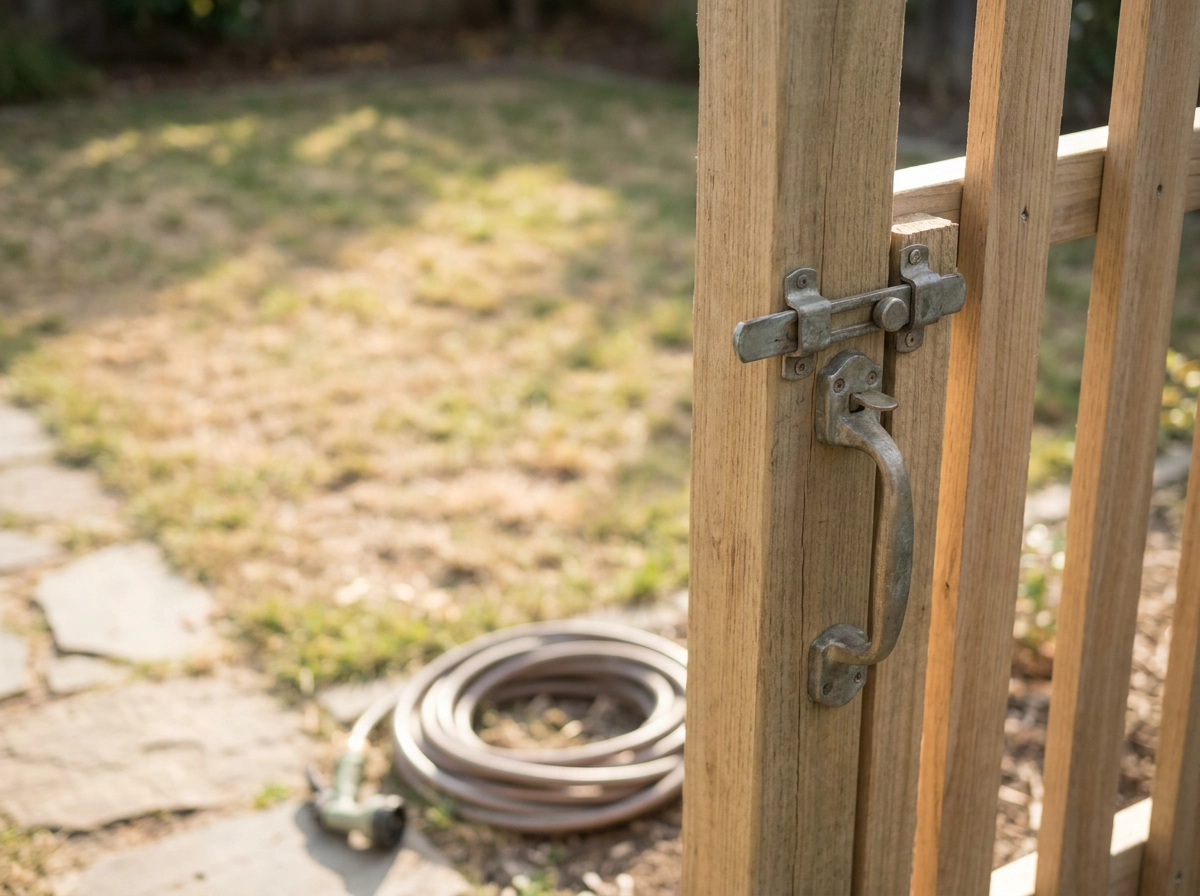
The latch must sit at least 1.5 metres above ground level, keeping it well out of reach of small children. On the pool-facing side is the preferred position. If any release mechanism is accessible from outside the fence, it must be positioned so a child cannot reach through or underneath to operate it.
One rule that catches homeowners off guard: gates must never be propped open, even briefly during a backyard party or while carrying equipment through. Propping is a breach of SA pool fencing regulations regardless of how short the time is.
For more detail on gate hardware and how these rules apply in practice, see our frequently asked questions about gate installation in Adelaide.
Development Approval and the Council Process in Adelaide
Getting your gate right is only part of the picture. Before a single post goes in the ground, you need formal development approval.
Development approval is mandatory for both a new pool and its safety fencing.
Adelaide’s approvals are handled at the local council level, so paperwork and assessment steps vary by area. West Torrens, Mitcham, Prospect and other councils each manage their own process, so contact your specific council early to confirm requirements.
When councils assess your application, they typically check barrier height and location, pump safety, structural adequacy of the fence, and CPR signage placement.
That last point catches some homeowners off guard. CPR signage showing resuscitation procedures for children must be displayed prominently near the pool. It is a separate requirement from the fence itself, but councils verify it as part of the same assessment.
Working with an installer who understands SA pool fencing and local council expectations means your submitted plans will accurately reflect what gets built, reducing delays or requests for additional information. You may also find it useful to review frequently asked questions about insurance fencing in Adelaide for broader context on how compliance intersects with your property obligations.
The Pre-Filling Rule: Why the Fence Must Come First
Once your development application is lodged, there is one more rule that catches many Adelaide homeowners off guard: the safety barrier must be fully installed and inspected before the pool is filled with water. This is a legal requirement under SA pool fencing regulations, not a suggestion you can work around.
The most common and costly mistake is treating the fence as a finishing touch. Fitting the pool first and the fence later can leave you in a situation where the council requires the pool to sit empty until compliance is confirmed. That means a finished pool you cannot use, and potentially significant rework costs.
This rule applies equally to above-ground pools with filtration systems. Council approval is still required before filling, so the informal approach of filling first and sorting the paperwork later is not an option regardless of pool type.
The practical fix is straightforward: treat the fence as part of the pool build, not a separate project. Map out your installation timeline so the barrier is ready for inspection before your pool is due for completion.
Booking your fencing contractor early, before construction begins, gives you the best chance of hitting that sequence without delays. If you are ready to plan your installation properly from day one, get started with New Fence Adelaide to discuss your project timeline.
Your Pre-Installation Compliance Checklist
Before you book a contractor or order materials, run through this checklist. Tick off every item and you will be in good shape when your development application lands on the council’s desk.
- Fence height: Minimum 1.2 m (1.8 m for boundary fences on the pool side) — see height requirements above.
- Non-climbable design: No horizontal rails, footholds or handholds on the pool-facing side, with a compliant 900 mm non-climbable zone at the top — see design rules above.
- Gate mechanics: Outward-swinging, self-closing, latch at least 1.5 m above ground — see gate requirements above.
- Clear the perimeter: Walk the outside of the fence line and remove anything within 900 millimetres that a child could use as a step. Garden pots, outdoor furniture, raised garden beds and retaining walls are the most common oversights.
- Lodge your development application first: Submit to your local Adelaide council before construction begins — see council process above.
- CPR signage placement: Confirm exact placement requirements with your council during the approval process — see council process above.
- Do not fill the pool early: The barrier must be installed and approved before any water goes in — see the pre-filling rule above.
Print this list, work through it with your installer, and you will avoid the most common reasons Adelaide pool fencing applications get knocked back.
Pool Fencing Materials That Work Well in Adelaide
Once you have your checklist sorted, choosing the right material makes the job much easier.
Aluminium slat fencing is a popular choice for Adelaide pool enclosures. Its vertical design naturally avoids horizontal footholds, which aligns with the no-horizontal-foothold requirement under SA regulations. It also holds up well in South Australia’s hot, dry summers.
Colorbond steel suits homeowners who want privacy alongside safety. The solid, continuous surface has no gaps or rails, leaving no horizontal rails or footholds that would breach the non-climbable zone rule. If you want more detail on how it performs around Adelaide properties, this overview of Colorbond fencing for Adelaide homes covers the key benefits. Both aluminium and Colorbond can be installed to the exact required height and fitted with compliant self-closing gate hardware.
Glass pool fencing is another option you will see around Adelaide. It keeps the pool area visible, which many families prefer, and can satisfy non-climbable requirements when posts and framing are correctly specified. Post placement and framing details need close attention to keep the barrier fully compliant.
Whichever material you go with, ask your installer whether they have completed compliant SA pool fencing projects using that specific product and method. Material choice alone does not guarantee a compliant result; the installation detail is equally important.
Plan It Right From the Start
Once you have chosen your material and confirmed the installation detail with your installer, the final step is straightforward: follow through on the planning.
Getting every detail right before work begins is far less expensive and stressful than pulling out non-compliant fencing after the fact. Work through the compliance checklist earlier in this guide as your starting reference, not an afterthought.
Engage your fencing contractor as early as possible, ideally before pool construction begins. That way the barrier can be installed, inspected and approved before the pool is ready to fill, keeping your project on schedule.
If you are planning pool fencing in Adelaide and want it done right the first time, New Fence Adelaide installs pool barriers that meet SA requirements using materials suited to local conditions. There is no guesswork involved and no costly rework waiting on the other side.
Get in touch with New Fence Adelaide to talk through your project and get a clear picture of what a compliant installation looks like for your specific property.
Conclusion
Getting these details right from the start protects your family, avoids costly rework, and keeps your project moving forward without delays.
If you are ready to move forward with a compliant, professionally installed pool fence in Adelaide, contact New Fence Adelaide today and get your project started the right way.