Picking a fence sounds simple until you realise that one decision you probably haven’t thought much about can change everything: which way the slats run. Horizontal or vertical. It seems like a minor detail, but the orientation of your aluminium slat fencing affects how private your yard feels, how your home looks from the street, and even what you’ll pay to get it installed.
If you’ve been researching aluminium horizontal slat fencing, you’ve likely seen both styles and maybe wondered which one is actually right for your property. The answer isn’t just about what looks good on Pinterest. It depends on your block’s shape, how your neighbours are positioned, whether your land slopes, and what kind of architectural vibe your home gives off.
In this post, we’ll break down exactly what changes when you flip the orientation, where each style performs best, and how Adelaide-specific factors like block geometry and local design trends should influence your decision. By the end, you’ll have a clear picture of which direction makes the most sense for your property.
What Slat Orientation Actually Changes
Most homeowners choose aluminium slat fencing based on a photo they liked online. That is a reasonable starting point, but orientation does more than set a visual style. It affects how heavy or light the fence looks, how well it screens different sightlines, what structural support it needs, and whether it suits the shape of your block.
Horizontal aluminium slat fencing draws the eye sideways across the boundary. Even at full height, this creates a contemporary, low-set feel that makes a property feel open rather than enclosed. Vertical aluminium slat fencing pulls the eye upward, giving the fence a taller, more structured presence that works across a broader range of home styles, from modern new builds to older character homes.
Privacy works differently depending on orientation. Both layouts let you control screening by adjusting gap width between slats, but the angle at which those gaps become visible differs. Horizontal slats are easier to see through from an elevated position, such as a neighbour’s second-storey window or a hillside property above yours. Vertical slats reduce that overhead exposure because the slat edges face upward rather than outward.
There are also structural implications worth knowing before you commit. These are covered in the sections ahead, but they influence cost and installation complexity in ways that are not obvious from finished photos.
If you are weighing up the broader case for this material first, the Why Choose Aluminium Slat Fencing page is a useful reference. For Adelaide homeowners in coastal areas, New Fences, Colorbond and Aluminium Slat Fencing covers local installation context worth considering early in your planning.
Horizontal Aluminium Slat Fencing: What It Does Well
Horizontal slats have become the go-to choice for new Australian residential builds, and it is easy to see why. They suit the clean lines and low-set proportions of modern homes with flat or skillion rooflines particularly well, which describes a large share of newer Adelaide properties.
Part of the appeal is how naturally they integrate with the home itself. When your facade features horizontal weatherboards, rendered render lines, or flat cladding panels, a horizontal aluminium slat fence echoes that geometry rather than working against it. The result feels cohesive rather than like a fence that was simply dropped in front of the house.
On flat Adelaide blocks, this effect is especially strong. Consistent horizontal lines sit in visual balance with the site; they do not introduce tension or fight the natural grade of the land. If your block is level, horizontal slats tend to feel settled and proportionate in a way that is hard to argue with.
Privacy is also genuinely adjustable. Narrowing the gap between slats increases screening while still allowing airflow through the fence, which matters during Adelaide’s hot summers when good ventilation around outdoor spaces makes a real difference. Our Colorbond and aluminium slat fencing installation Adelaide page covers how these systems are put together if you want more technical detail.
There are two limitations worth knowing before you commit. First, horizontal gaps are more vulnerable to overhead sightlines. If a neighbour has a two-storey home or your block sits lower than an adjacent property, people at a higher elevation can see through the gaps more easily than with vertical slats.
Second, any horizontal panel spanning more than 2.4 metres needs a mid-support post to prevent sagging over time. That adds material and labour, so raise it with your installer at the quoting stage.
Vertical Aluminium Slat Fencing: Where It Has the Edge
Vertical slats address the two main limitations of horizontal fencing directly: sloped ground and overhead sightlines.
Visual presence without extra height. Vertical slats draw the eye upward, which makes a fence feel taller and more substantial than it actually is. If you need a strong boundary presence without pushing into council height limits, the vertical orientation does that work quietly.
Better performance on sloped blocks. This is where vertical aluminium slat fencing earns its place in Adelaide’s hillier suburbs. Because each slat runs straight down from rail to rail, the fence follows the slope of the land naturally. There are no stepped gaps at the base and no awkward misaligned lines where the ground rises or falls. On a flat block, the difference is minor; on a site with any meaningful gradient, it is significant.
Stronger privacy from above. The slat edges face upward rather than outward, which closes off sightlines from elevated positions. If you have a neighbour with a two-storey home overlooking your yard, or your property sits below a hillside, vertical slats will screen more effectively than horizontal ones at the same gap spacing.
Wider architectural fit. Horizontal slats look best paired with modern homes that echo those lines. Vertical slats are less prescriptive; they suit contemporary new builds, older character homes, and the heritage streetscapes found across Adelaide’s inner suburbs. They also work well as a standalone design feature on a boundary wall or garden screening panel, introducing rhythm and structure independent of what the house itself is doing. This versatility extends to gates too: if you are considering a matching entry point, why choose aluminium slat gates covers how the same logic applies.
Simpler installation on long runs. Because each slat is independently supported in the vertical position, the mid-span post requirements that come with long horizontal panels are less of a concern, which can reduce complexity on longer fence lines.
Horizontal vs Vertical Slats: A Practical Comparison
Here is a quick side-by-side breakdown across the factors that matter most.
Aesthetics: Horizontal slats suit modern, low-set homes and open garden settings, drawing the eye along the boundary rather than upward. Vertical slats suit a broader range of styles and add a sense of height to any boundary, making them more flexible as a design choice.
Privacy performance: Both orientations screen side-on sightlines effectively when gaps are kept tight. Vertical slats have the edge where overhead sightlines are a concern, such as neighbouring two-storey homes or elevated blocks.
Site suitability: Horizontal aluminium slat fencing works best on flat or near-flat blocks, where consistent lines sit naturally in proportion with the site. Vertical slat fencing handles sloped terrain far more cleanly, with each slat dropping straight down regardless of ground level.
Structural requirements: Horizontal panels spanning more than 2.4 metres require mid-span support posts to prevent sagging over time, which adds cost and complexity to installation. Vertical configurations generally do not carry this requirement, which can simplify longer fence runs.
Maintenance: Both orientations use powder-coated aluminium and need the same level of upkeep. A periodic rinse with water is typically sufficient to keep them looking good. A professionally installed system can last 20 or more years with basic care.
Architectural integration: Horizontal slats pair naturally with homes that already feature horizontal lines, such as rendered facades or weatherboard cladding. Vertical slats work as a standalone design element regardless of what the house is doing, which is worth considering if your home’s exterior does not follow a strong horizontal theme.
If you are also weighing up materials more broadly, this guide on choosing between Colorbond and timber fencing for Adelaide homes covers how aluminium compares in practical terms.
Adelaide-Specific Factors Worth Considering
Those general trade-offs are worth knowing, but a few Adelaide-specific factors can genuinely change which orientation makes sense for your property.
Climate and material durability apply equally to both orientations here. Adelaide summers are intense, with UV levels that can degrade lower-quality coatings over time. Quality aluminium slat fencing uses powder-coated finishes engineered for Australian conditions, handling heat, UV exposure, and thermal expansion without cracking or peeling. Neither orientation has an advantage on this front; what matters is the quality of the finish itself.
Your block’s location within Adelaide matters more than most people expect. Flat suburban lots across the northern and southern plains suit horizontal slats, where consistent lines sit naturally with the terrain. On hillier ground in suburbs like Mitcham, Burnside, or the Adelaide Hills, vertical slats handle slope far more cleanly and avoid the awkward misaligned look that horizontal panels can produce on uneven sites.
Heritage overlay zones are easy to overlook until they become a problem. Inner suburbs including Unley, Norwood, Prospect, and Henley Beach carry council guidelines restricting fence height, materials, or street setback, regardless of orientation. Just as South Australian pool fencing rules require checking before installation (as this plain-English guide to SA pool fence regulations explains), front fence choices in heritage areas deserve the same due diligence. Check with your local council before finalising anything.
Streetscape context is worth a moment’s thought. In an established street with traditional front fences, a tall horizontal slat panel can read as out of place even when it suits the home itself. A fence that fits both the property and the street tends to hold its appeal for buyers, making it a smarter long-term choice.
Can You Use Both Orientations on the Same Property?
Once you have worked through the block-specific factors above, it is worth knowing that choosing between orientations does not have to be an either/or decision.
Many Adelaide homeowners assume they need to pick one style and run it around the entire property. In practice, mixing horizontal and vertical aluminium slats on the same block is a considered design move, not a compromise.
A common approach is vertical slats on the street-facing front boundary, where upright lines add structure and kerb appeal, paired with horizontal slats along the side and rear boundaries for a relaxed, contemporary feel in the garden. The two orientations serve different purposes, so the combination has a clear logic behind it.
Mixing orientations also solves practical site problems. If your property has a sloped side boundary and a flat rear boundary, vertical slats handle the slope cleanly while horizontal slats suit the level run at the back. Each section does what it does best.
The key is intent. Mixing orientations without a clear reason tends to look disjointed, as if the decisions were made separately rather than as part of a coherent plan. Getting that plan sorted before installation begins makes a real difference to the finished result.
If you are unsure how to divide your boundaries, the team at New Fence Adelaide can walk through your block layout and advise on where each orientation adds the most value, rather than defaulting to one style across the whole property.
How to Choose the Right Orientation for Your Block
Once you have a plan for where each orientation works best, the next step is making a confident final call. Here is a practical way to work through it.
Start with the block itself. Flat site? Horizontal aluminium slat fencing is a strong default. It sits in proportion with level ground and delivers the clean, contemporary look most modern Adelaide homes are after. Sloped site? Vertical slats almost always perform better, both structurally and visually, because each slat drops straight down regardless of ground level.
Think about sightlines before you think about style. Walk your boundary and identify where privacy matters most, and from which direction. Overhead sightlines from a neighbouring two-storey home call for vertical slats. Side-on views from the street can be handled well by either orientation with the right gap spacing.
Match the fence to your home’s architecture. Horizontal aluminium slat fencing looks most at home against modern facades with clean horizontal lines. Vertical slats are more versatile and work across a broader range of home styles, from contemporary new builds to Adelaide’s older character homes.
Ask about span lengths before you get a quote. On longer fence runs, horizontal panels spanning more than 2.4 metres typically need mid-support posts to prevent sagging. That affects both material costs and how the finished fence looks, so raise it early.
Check council rules before you commit. If your property sits in a heritage overlay zone or near a street boundary, height limits and setback requirements may narrow your options regardless of what you prefer. South Australian planning guidelines set clear thresholds worth confirming with your local council.
Get a site-specific assessment. Photos on social media are useful for inspiration, but they cannot account for your block’s geometry, neighbouring sightlines, or street context. A proper on-site look, like the assessments offered through New Fences, Colorbond & Aluminium Slat Fencing, gives you a recommendation grounded in your actual property rather than a generic one.
The Bottom Line on Slat Orientation
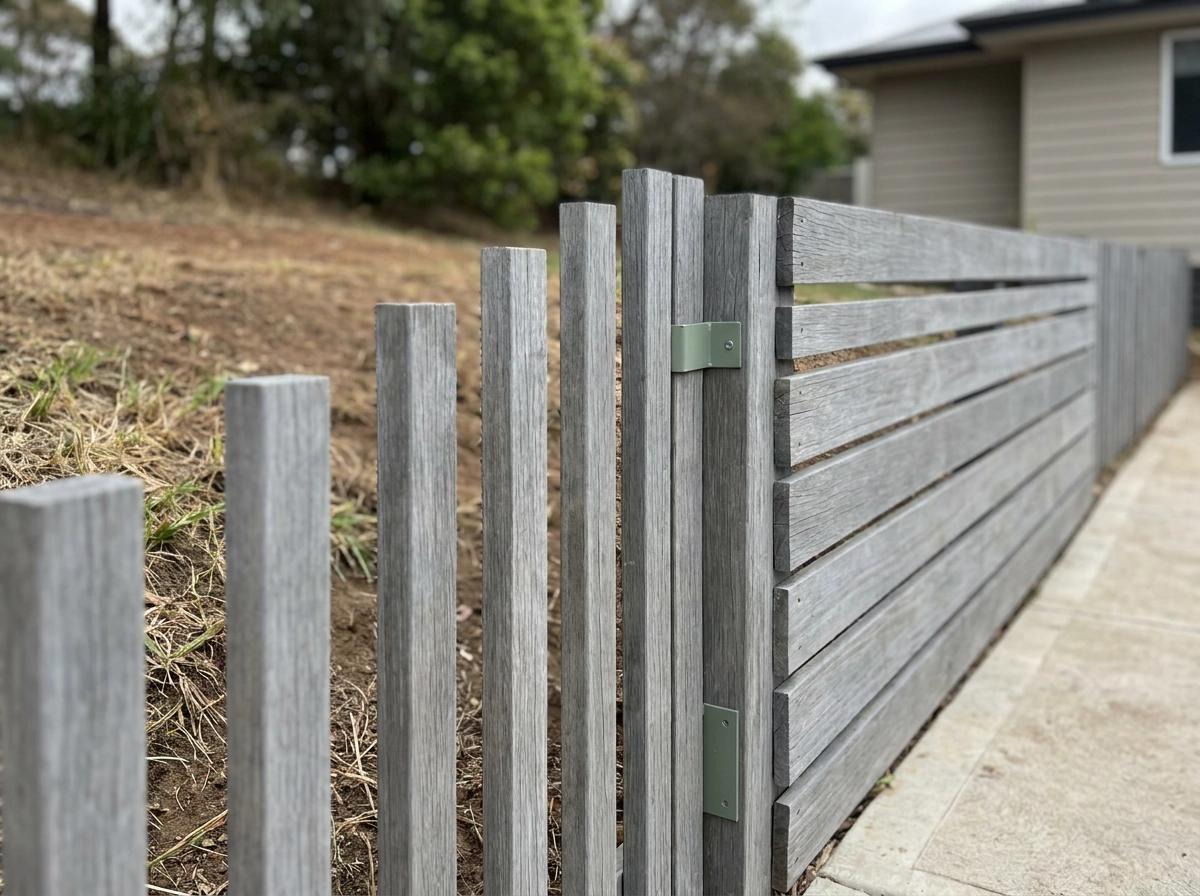
Once you’ve worked through your block, sightlines, and home style, the decision usually becomes clear.
Horizontal aluminium slat fencing is the stronger choice for flat Adelaide blocks and modern homes where clean, consistent lines are the goal. Vertical aluminium slat fencing handles sloped terrain more cleanly, delivers better privacy from above, and suits a wider range of architectural styles from contemporary builds to character homes in established suburbs.
Neither orientation is universally better. The right fit comes down to your block geometry, where privacy matters most, and what works with your home’s architecture rather than simply what looks good in a photo.
It is also worth remembering that you are not locked into one orientation across the entire property. Using vertical slats on a sloped side boundary and horizontal slats along a flat rear boundary, for example, is a practical and considered approach, not a compromise.
If you are still weighing up the options, a site-specific conversation is the most reliable shortcut. New Fence Adelaide installs aluminium slat fencing across Adelaide and can assess your specific block to recommend the orientation that works hardest for your property. Get in touch to talk through what suits your site.
Conclusion
Choosing between horizontal and vertical aluminium slat fencing comes down to four things: your block’s slope, your privacy needs, your home’s architectural style, and how the fence will read from street level. Horizontal slats deliver sharp, modern lines on flat blocks. Vertical slats handle uneven terrain cleanly and offer broader compatibility with Adelaide’s diverse housing styles. And in many cases, using both orientations on a single property is not a compromise but the smartest solution available.
The right orientation is not about trends. It is about what genuinely works for your site.
If you are ready to move forward, or simply want a clearer picture of what suits your block, New Fence Adelaide can walk you through the options in person. Get in touch today and take the guesswork out of one of your property’s most visible investments.