You have probably looked at a Colorbond quote for your sloped block and wondered why it is so different from a neighbour’s. The truth is that the slope of your land is the biggest hidden variable in any quote. Before you agree to anything, a decision has to be made about how the fence will handle that fall.
For colorbond steel fencing on a sloping block, there are three main ways to build: rake, step, or retain. Each one changes the job completely. Raking follows the slope in one continuous line. Stepping uses level panels on taller posts. Retaining decides who is responsible for the height difference between properties.
This is not about cost. It is about what each method does to your posts, panels, and drainage.
In this post, we will walk through why slope is the hidden variable in every quote, what it changes in your fence, and how to settle the method before you commit. Let’s get started.
Why Slope Is the Hidden Variable in Every Colorbond Fence Quote
Two quotes for the same boundary, two different numbers, and a block that slopes. That’s the moment many Adelaide homeowners realise the slope wasn’t handled the same way twice.
Before anything is ordered, your sloping boundary has to be resolved into a build method: rake, step, retain, or a mix. That decision often sits invisibly behind a quote line, yet it changes post heights, panel counts, sheet cutting and drainage. Two quotes can describe two genuinely different fences and still look identical on paper.
Colorbond steel fencing uses a system of posts, rails and panels that must be set out before installation begins, so the method has to be chosen first. Slope can’t be absorbed on site the way it might with a timber build.
One caution: council guidance and the Planning and Design Code are updated periodically. Treat anything here as a starting point and confirm current requirements with your council.
If you’re deciding between supplying panels yourself and having the job installed, Colorbond fence panels versus full installation is worth a read before you compare quotes.
What Slope Changes in Colorbond Steel Fencing: Posts, Panels and Drainage
Four terms first. Raking means panels follow the ground’s fall in one continuous sloping line. Stepping keeps panels level and drops the fence in stages. A plinth is a low base, often masonry, between the ground and the fence. The bottom rail is the lowest horizontal rail supporting the panels.
Here’s what slope changes.
Post heights. Every post is set and cut to suit the ground at that exact spot. On a stepped fence, posts need to accommodate the height difference at each level change.
Panel count. More panels and posts are typically needed per metre of boundary on a stepped run than on a raked one.
Bottom rail clearance. The rail must clear the ground along the whole run, which sets how big the gap under the fence looks at the low end.
Drainage. Water still has to get past the fence line, either through that gap or along a proper escape path at a retaining wall.
Height. Fence height is measured from the lowest adjoining finished ground level to the top of the fence, including any retaining wall or plinth. That is why one sloping side can push a fence over an approval threshold.
Planning around an existing fence? See our guide to raising an existing Colorbond fence.
Raking: One Continuous Line That Follows the Fall
Raking is the method Colorbond’s own installation guidance recommends on sloping ground. The panels follow the fall in one continuous sloping line, with each post cut progressively shorter or longer to hold it.
It suits gentle, reasonably even falls, where the boundary drops at a consistent rate from one end to the other. Steep or wildly uneven ground fights the method.
Posts end up at varying heights, each cut to its own point on the slope, so accurate setting out at the start matters more than on a level boundary.
Sheets are typically cut on site to follow the slope. Even small trims per sheet add up over a long run, affecting how many Colorbond fence panels you need to order.
On drainage, a raked fence keeps the gap under the bottom rail fairly even, so surface water generally keeps moving past the fence line rather than pooling against it.
The trade-off is visual. The top line mirrors the ground, which some homeowners like and others find less tidy than a level top. Installation guides rate raking as better looking and stronger, but the look is still a matter of taste.
Weighing a rake against repairing an existing fence? Here’s how to tell when an Adelaide fence needs repair rather than replacement.
Stepping: Level Colorbond Fence Panels on Taller Posts
If raking follows the fall, stepping answers it a different way: panels stay level and are fixed between posts set at different heights, so the fence drops in stages down the slope instead.
Stepping suits steeper or uneven falls, and boundaries where a level top line matters for looks, privacy or screening. It also keeps that top line uniform on a shared boundary, which is where knowing what Good Neighbour fencing in Adelaide actually is helps, since it’s a specific fence style rather than a generic label, see our guide on Good Neighbour fencing in Adelaide for what it actually means.
Each step post carries the full panel height plus the drop to the next step, so posts run longer than on a raked fence, and there are more of them. Panels multiply too: more panels, each shorter, means more joins and more posts per metre of boundary. That’s the main reason a stepped quote reads differently from a raked one.
Drainage is the bit people miss. It’s worth checking how water moves at each step, as the corners can collect runoff if the ground isn’t graded to shed it.
Height is the other consideration. A stepped fence looks taller from the low side of the block. Retaining is what decides who owns that height difference in the first place.
Retaining: Deciding Who Owns the Height Difference
Retaining answers a different question from fencing. A retaining wall holds back or supports soil once the natural ground level has been altered. The fence is a separate structure that may sit on top of a wall or plinth, so keep the two decisions apart in your own head.
Responsibility follows who changed the land. If you alter the natural lie of the ground, you are responsible for providing the retaining wall, as Charles Sturt Council’s fencing guidance sets out. If both owners change the level, both are jointly responsible, and sharing the cost is a civil matter to negotiate between neighbours.
Measurement is where this catches people out. That measurement rule means even standard-height panels on a wall can cross a threshold.
Drainage matters too. A retaining wall should have a drainage path to manage water pressure, ask your installer how this will be handled.
Boundary fences are shared assets. Your fence is jointly owned by you and your neighbour, and removing or altering it needs their agreement or a court order. Have the conversation first, and treat mediation as the sensible next step if you cannot agree.
This is practical information, not legal advice. Rules get updated, so confirm current requirements with your own council and the Legal Services Commission. It is the same habit we bring to any job, whether that is checking pool fence compliance in Adelaide or assessing a sloping boundary before a quote.
How Rake, Step and Retain Change Fence Height and Approvals
This is where raking, stepping and retaining shift from build choices to approval questions. As noted earlier, fence height is measured from the lowest adjoining finished ground level, including any plinth or retaining wall.
Councils set their own limits. In Charles Sturt, development approval is required for fences over 2.1 m and retaining walls over 1 m. Fences over 1 m within 6 m of a street intersection need approval unless a 4 m by 4 m corner cut-off exists.
Those are one council’s rules, not state-wide law. Councils differ, and guidance changes, so check your own council and the live Planning and Design Code before work starts.
That matters before you sign. The method changes the measured height, so a raked, stepped or retaining-wall fence can land on different sides of a threshold at the same panel height. Settle the method first, then compare the real cost drivers behind a Colorbond quote.
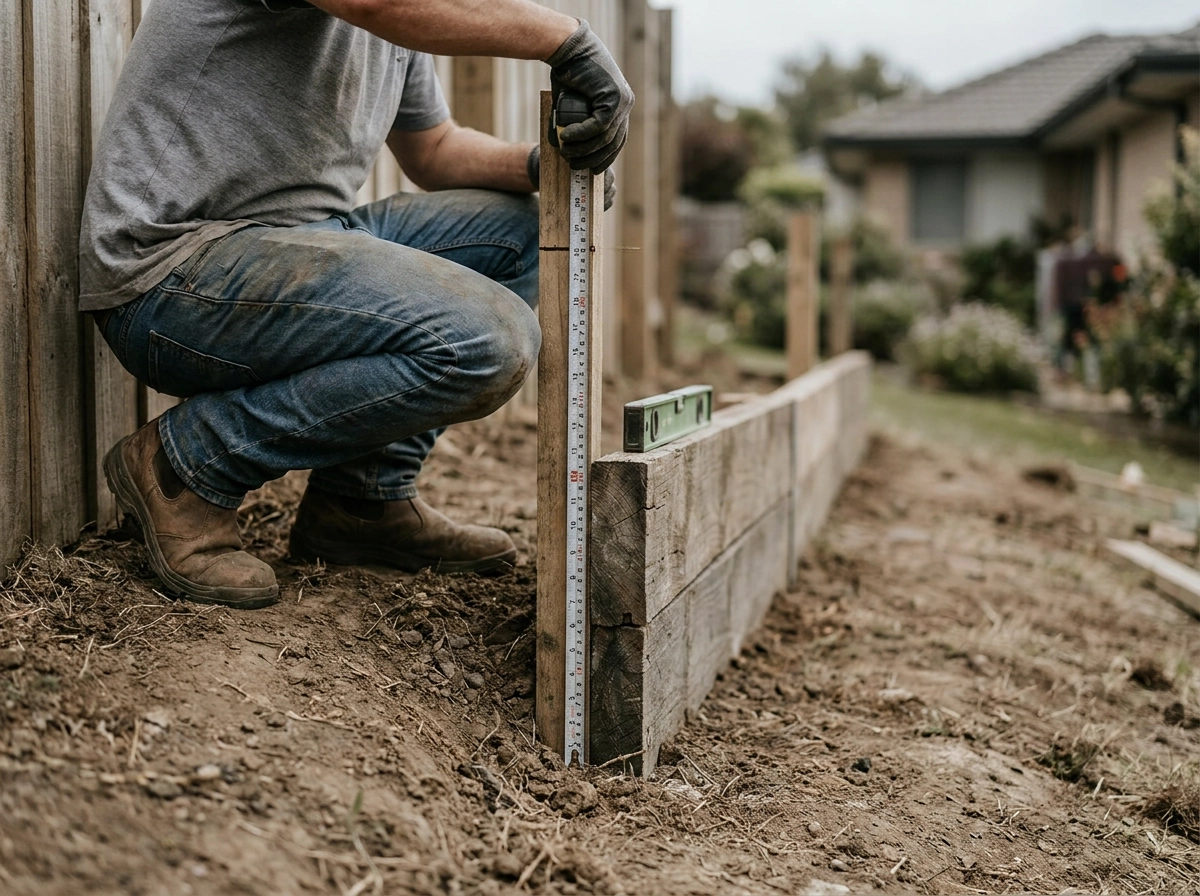
A Worked Example: Measuring From the Lowest Finished Ground
Here’s a hypothetical showing how these rules land in practice. It’s an illustration only, not a real job, quote or estimate.
Picture a 20 m boundary on a sloping Adelaide block with houses both sides, dropping around 900 mm from high end to low end.
Raked, the top follows one continuous fall. Panels are cut to suit, posts cut on site, and the bottom rail keeps a fairly even gap along the run.
Stepped, panels stay level in stages. Each step needs a longer post, plus more panels and joins, and the ground line looks like a staircase.
Retained, the low block is filled or the high block is cut. Wall responsibility follows whoever changed the land, and the fence sits on a wall or plinth. The same scoping logic applies to aluminium slat fencing prices in Adelaide: confirm the method before the quote.
If the fence top stays level, a modest-looking panel can measure past a council threshold from the lowest adjoining finished ground. Same boundary, three measured outcomes, which is why the method must be settled before signing.
What to Settle Before You Sign the Quote
The lesson from that example is simple: the method and the measurement come first. Before you sign, settle these points and get them in writing rather than nodding them through on site.
- Ask which method the quote assumes: rake, step, retain or a mix. Get it written on the quote.
- Ask what that method does to post heights, panel counts and on-site sheet cutting, and whether the scope changes if the method changes.
- Confirm the fence height as it will actually be measured, from the lowest adjoining finished ground level, and whether council approval is needed.
- Confirm drainage: how water gets past the fence line, and whether any retaining wall has a proper escape path so the uphill ground does not stay wet.
- Settle retaining responsibility and the neighbour conversation before work starts. Put any agreement about the wall and cost sharing in writing.
- Ask for a plan showing post positions and heights, and keep it. That plan is what shows what was actually agreed.
This assessment can sit inside the quote conversation. It also helps to know what to expect from site prep through to completion before anyone starts digging.
The Method Comes Before the Money
The method has to be chosen before the quote is signed, not worked out on the day. The three methods, rake, step, retain, all change post heights, panel counts and drainage, so the choice must be locked in before ordering.
Three things to do now:
- Walk the whole boundary, not just the ends, so you know where the slope actually sits.
- Talk to your neighbour about any retaining before you agree to anything.
- Check current height and approval rules with your council.
Confirm the method, the measured height and the drainage plan first. The rest gets simpler.
Conclusion
Slope is the hidden variable in every Colorbond fence quote, rake, step or retain each changes post heights, panels, drainage and approvals, so confirm the method before signing. Measure from the lowest finished ground, talk to your neighbour early about retaining, and check council rules. Put the agreed method, measured height and drainage plan in writing, then you can move forward with confidence and a fence that suits your block.